
Seasonal Home Maintenance Checklist for North Texas Homes

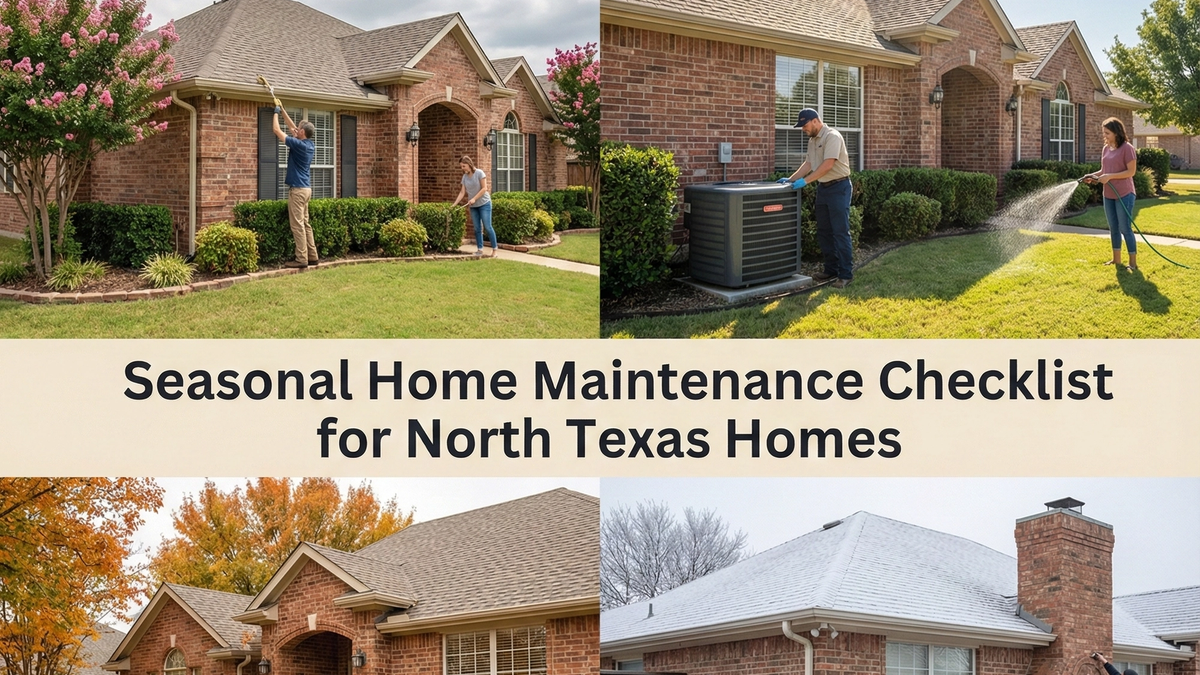
Living in North Texas means dealing with weather extremes that most of the country doesn't experience. We go from 105°F summer days to ice storms in February, often with minimal transition time between seasons.
I'm Jeremy, owner of MetroPlex Pros, and I've been maintaining luxury homes across University Park, Highland Park, and the Dallas-Fort Worth area for years. The homes that stay in great shape? They're the ones where owners stay ahead of seasonal maintenance instead of reacting to emergencies.
Let me share what I recommend based on what actually breaks, fails, or costs homeowners money when they skip seasonal upkeep.
Why Seasonal Maintenance Matters in DFW
North Texas is uniquely hard on homes. Here's what we deal with:
Summer heat - Months of 95°F+ temperatures stress HVAC systems, electrical components, and outdoor fixtures
Sudden temperature swings - We can go from 70°F to 30°F overnight, causing expansion/contraction that loosens connections
Severe storms - Spring brings hail, high winds, and heavy rain that can damage outdoor electrical and plumbing
Clay soil movement - Our expansive clay soil shifts with moisture changes, affecting foundations and underground utilities
Winter freezes - Not frequent, but when pipes freeze or ice forms, it causes expensive damage
Homes here need different maintenance than homes in milder climates. This isn't Boston or San Diego - this is Texas, and your home needs a Texas-specific approach.
Spring Maintenance (March-May)
Spring in North Texas means preparing for brutal summer heat and severe storm season.
Electrical Systems
Test GFCI outlets Press the "test" button on every GFCI outlet (bathrooms, kitchen, garage, outdoor). These protect you from electrical shock, especially important with spring rain increasing moisture. If the outlet doesn't trip when you press test, it needs replacement.
Check outdoor outlets and lighting Winter moisture and temperature swings can corrode outdoor connections. Test every outdoor outlet and light fixture. Look for:
- Rust or corrosion on outlet covers
- Loose or damaged weather seals
- Flickering lights
- Outlets that don't work
Spring storms mean you'll be using outdoor power for cleanup - make sure everything works before you need it.
Inspect your electrical panel Open your panel and look for:
- Rust or moisture inside the panel box
- Loose wire connections
- Breakers that feel hot to the touch
- Burnt or discolored areas
If you see any of these, call a licensed electrician. Don't wait - moisture and corrosion get worse over summer.
Ceiling fan maintenance You'll be running ceiling fans constantly in a few weeks. Now's the time to:
- Tighten any wobbling fans
- Clean dust off blades (reduces motor strain)
- Check that they're rotating counterclockwise for summer (pushes air down)
- Replace any burned-out lights
HVAC Preparation
Change air filters If you haven't changed your HVAC filter since winter, do it now. I recommend checking filters monthly during summer - DFW dust and pollen clog them fast.
Clear around outdoor AC unit Your AC condenser needs airflow to work efficiently:
- Remove debris, leaves, grass clippings within 2 feet
- Trim back bushes and plants
- Hose off the unit exterior (power off first)
Restricted airflow makes your AC work harder, increases your electric bill, and shortens equipment life.
Schedule professional AC service May is the latest you want to wait. Every AC tech in DFW is slammed once temperatures hit 100°F. Get on the schedule early.
Outdoor Spaces
Inspect outdoor electrical for pool season If you have a pool:
- Test all pool-area GFCI outlets
- Check pool pump electrical connections
- Inspect pool lighting
- Verify timer switches work properly
Pool electrical failures during summer are inconvenient and expensive.
Check outdoor faucets and hose connections After winter, check for:
- Leaking faucets or loose connections
- Cracked hoses
- Proper water flow
You'll need these working for summer lawn care and cleaning.
Storm Preparation
Secure loose outdoor items Spring storms bring high winds:
- Anchor down patio furniture
- Check that outdoor electrical boxes are properly sealed
- Secure any loose siding or trim that could tear off
Test your generator (if applicable) If you have a backup generator:
- Run it for 20-30 minutes
- Check fuel levels
- Verify transfer switch operation
- Schedule professional service if it's been a year
Spring storms knock out power. Don't discover your generator doesn't work when you need it.
Summer Maintenance (June-August)
Summer is about keeping systems running through extreme heat.
Electrical Systems
Monitor your electrical usage If you're consistently tripping breakers during summer, your panel might be undersized for your cooling needs. This is the time you'll notice if you need an upgrade.
Check for hot outlets or switches When AC and appliances run constantly, electrical issues become obvious:
- Outlets that feel warm to touch
- Switches that are hot
- Flickering lights when AC kicks on
These are signs of loose connections or overloaded circuits. Don't ignore them - they cause fires.
Outdoor lighting for security Longer daylight means you might not notice outdoor lights that have failed. Do a nighttime walk-around to verify:
- Security lights work
- Motion sensors trigger properly
- Landscape lighting is functioning
HVAC Monitoring
Check air filters monthly In summer heat with constant AC use, filters get dirty fast. Clogged filters:
- Reduce cooling efficiency
- Increase your electric bill
- Strain your AC system
- Reduce indoor air quality
Set a monthly reminder on your phone.
Listen for unusual AC sounds You know what your AC normally sounds like. If you hear:
- Grinding or squealing
- Rattling or banging
- Hissing sounds
Call an HVAC tech. Small problems become expensive failures if ignored.
Keep condenser unit clean Mow around your condenser carefully - grass clippings stick to the fins and block airflow. Quick spray with a hose (power off first) keeps it clean.
Indoor Comfort
Ceiling fan direction check Sounds basic, but I've been in plenty of homes where fans are set wrong. For summer:
- Counterclockwise rotation (looking up at the fan)
- This pushes air down for cooling effect
Wrong direction just circulates hot air near the ceiling.
Check attic ventilation If you can safely access your attic:
- Verify attic fans are working (if applicable)
- Check that soffit vents aren't blocked
- Look for any signs of moisture or mold
Proper attic ventilation reduces AC load and extends roof life.
Fall Maintenance (September-November)
Fall means preparing for winter and recovering from summer stress.
Electrical Systems
Outdoor lighting for shorter days As daylight decreases:
- Replace any outdoor bulbs that burned out over summer
- Add security lighting if needed
- Check timer settings for earlier activation
Holiday lighting preparation If you use holiday lights:
- Test strands before putting them up
- Check outdoor outlets are working
- Verify GFCI protection on circuits you'll use
- Consider dedicated circuits for elaborate displays
Overloaded circuits cause fires during holidays. Plan ahead.
Generator prep before winter storms Texas ice storms knock out power for days. Now's the time to:
- Service your generator
- Test transfer switch
- Stock fuel supply
- Verify it powers critical circuits
HVAC Transition
Schedule furnace service Before first cold snap:
- Have heating system professionally inspected
- Change filter
- Test thermostat switching from cool to heat
- Verify all vents are open and unobstructed
Reverse ceiling fan direction For winter:
- Clockwise rotation (looking up at fan)
- Runs on low speed
- Pulls cool air up and pushes warm air down from ceiling
This redistributes heat more efficiently.
Weatherization
Check weather stripping Around doors and windows:
- Replace worn weather stripping
- Seal gaps with caulk
- Check that doors close tightly
Better sealing reduces heating costs and prevents moisture infiltration.
Protect outdoor faucets Before first freeze:
- Disconnect and drain garden hoses
- Install faucet covers
- Know where your water shutoff valves are
Burst pipes from frozen outdoor faucets cost thousands in damage.
Winter Maintenance (December-February)
Winter maintenance focuses on freeze protection and indoor comfort.
Freeze Prevention
Protect exposed pipes Before freezing weather:
- Insulate exposed pipes in attics, crawl spaces, garages
- Know where your main water shutoff is
- Keep cabinet doors open under sinks during hard freezes
I respond to more emergency calls from burst pipes than almost anything else. Prevention is simple and cheap.
Drip faucets during hard freezes When temperatures drop below 28°F for extended periods:
- Let faucets drip slightly (both hot and cold)
- Focus on faucets on exterior walls
- Open cabinet doors to allow warm air circulation
The cost of water dripping is nothing compared to pipe replacement.
Keep your home heated Even if you travel, maintain minimum 55°F inside:
- Set thermostat to "hold" not "vacation mode"
- Don't turn heat completely off
- Consider smart thermostat for remote monitoring
Electrical Safety
Space heater safety If using space heaters:
- Plug directly into wall outlets (never extension cords)
- Don't run multiple heaters on same circuit
- Keep away from flammable materials
- Turn off when leaving room or sleeping
Space heaters cause electrical fires when misused.
Check smoke and CO detectors Winter means more heating equipment running:
- Test every detector
- Replace batteries if needed
- Replace detectors older than 10 years
Heating season is when CO poisoning risks increase.
Monitor electrical panel Increased heating loads can reveal panel problems:
- Breakers that trip frequently
- Panel box that feels warm
- Burning smell near panel
If you notice any of these, call an electrician immediately.
Holiday Season
Avoid electrical overload Holiday decorations plus winter heating can max out circuits:
- Use LED lights (much lower power draw)
- Don't daisy-chain multiple extension cords
- Spread decorations across different circuits
- Use timers to avoid running everything simultaneously
Inspect decorations before use Before putting up lights:
- Check for frayed wires
- Look for cracked sockets
- Discard damaged strands
- Test outdoor-rated lights before installing
Old decorations degrade and become fire hazards.
Year-Round Maintenance
Some tasks don't fit neatly into seasons but matter all year.
Monthly Tasks
Test smoke and CO detectors Press the test button on every detector monthly. If they don't sound, replace batteries or the unit.
Check GFCI outlets Test at least the bathroom and kitchen GFCIs monthly, especially in homes with kids.
Visual electrical panel inspection Quick look for anything unusual:
- Breakers in tripped position
- Visible damage
- Unusual sounds or smells
Quarterly Tasks
Deep clean range hood filters Grease buildup is a fire hazard. Remove and wash filters every 3 months.
Inspect attic and crawl space Look for:
- Water stains or moisture
- Pest damage to wiring
- Proper insulation condition
Review your electrical usage Check utility bills for unusual spikes that might indicate failing equipment or electrical issues.
Annual Tasks
Professional electrical inspection For homes over 25 years old, annual inspection catches problems before they become emergencies.
Deep HVAC service Beyond filter changes, annual professional service extends equipment life dramatically.
Water heater maintenance Drain sediment, check anode rod, inspect for leaks. This adds years to your water heater life.
What Happens If You Skip Maintenance?
I wish I could say nothing, but here's what I actually see:
The $8,000 AC replacement - Could have been a $200 service call if caught early
The $15,000 water damage claim - From a burst pipe that a $30 faucet cover would have prevented
The electrical fire - From an overloaded circuit that had been showing warning signs for months
The failed generator - During a 3-day power outage in an ice storm
Maintenance isn't glamorous, but it's way cheaper than emergency repairs and disaster recovery.
Should You DIY or Hire Professionals?
I'm all for DIY, but know your limits:
Good DIY tasks:
- Changing air filters
- Testing GFCI outlets
- Cleaning outdoor units
- Replacing light bulbs
- Visual inspections
Hire professionals for:
- Electrical repairs or installations
- HVAC service and repairs
- Gas line work
- Anything requiring permits
- Anything you're not comfortable doing safely
The goal isn't to do everything yourself. The goal is to stay ahead of problems through regular attention and know when to call for help.
Creating Your Own Maintenance Schedule
Here's how to make this actually happen:
Use your phone calendar Set recurring reminders:
- Monthly: "Test smoke detectors and GFCIs"
- Seasonal: "Spring electrical check" or "Winterize outdoor faucets"
- Annual: "Schedule HVAC service"
Keep a home maintenance log Note when you:
- Changed filters
- Had service performed
- Replaced equipment
- Noticed problems
This helps you spot patterns and provides documentation for insurance or home sales.
Budget for maintenance Set aside money monthly for regular upkeep. It's much easier than scrambling to cover emergency repairs.
When to Call MetroPlex Pros
You don't need an electrician for changing light bulbs, but you should call when:
- Outlets or switches feel warm
- Breakers trip frequently
- Lights flicker consistently
- You smell burning near electrical components
- GFCI outlets won't reset or test properly
- You're planning renovations or additions
- Your home is 25+ years old and hasn't had an electrical inspection
We offer maintenance plans for clients who want professional oversight without thinking about scheduling. We'll handle the electrical components of your seasonal maintenance and alert you to issues before they become emergencies.
Schedule your electrical inspection by clicking the link.
The Bottom Line
North Texas weather is hard on homes. The difference between homes that maintain their value and homes that become money pits is usually just consistent attention to maintenance.
You don't have to do everything at once. Pick one season, follow that checklist, and build from there. Your home - and your bank account - will thank you.
Got questions about what your specific home needs? That's what we're here for. No pressure, just honest guidance from someone who's been maintaining DFW homes for years.

About Jeremy Mckinney
Jeremy - Founder & Lead Electrician
Licensed electrician and entrepreneur serving the Dallas-Fort Worth metroplex. After years of running electrical and handyman services for high-end residential clients, I got tired of overpriced field service software locking contractors out of their own data. So I taught myself to code and built Creative Job Hub - the tool I wish I'd had from day one.
When I'm not wiring smart homes in University Park or troubleshooting electrical panels, I'm writing about the real challenges contractors face and how to solve them without the BS. Everything you read here comes from actual job sites, not a marketing department.